
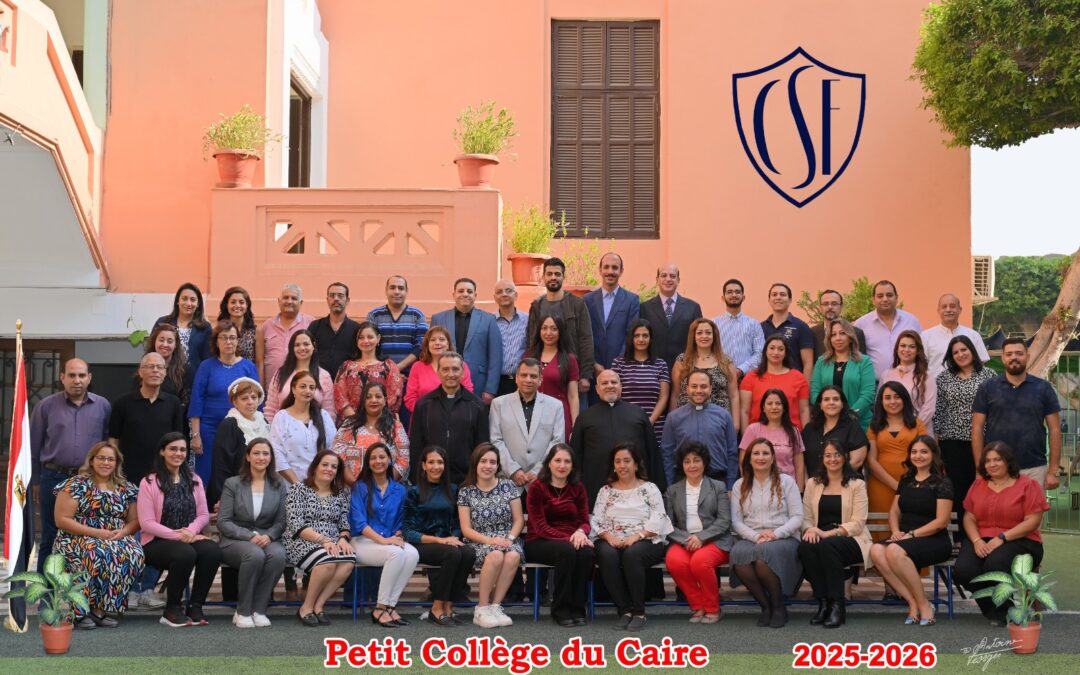
الخبرة الرسوليّة للدارس رامي منير
القلمُ الذي بدأ يكتب شعر أنّه يقترب من غايته، لكنّه مع الوقت احتاج أن يُبرى؛ لأنّ البراية، رغم ألمها، هي التي تعيد إلى القلم قوامه وحدّته، فيعود قادرًا أن يخطّ كلماتٍ جديدة بحياةٍ جديدة.
هكذا أصف هذه السنة.
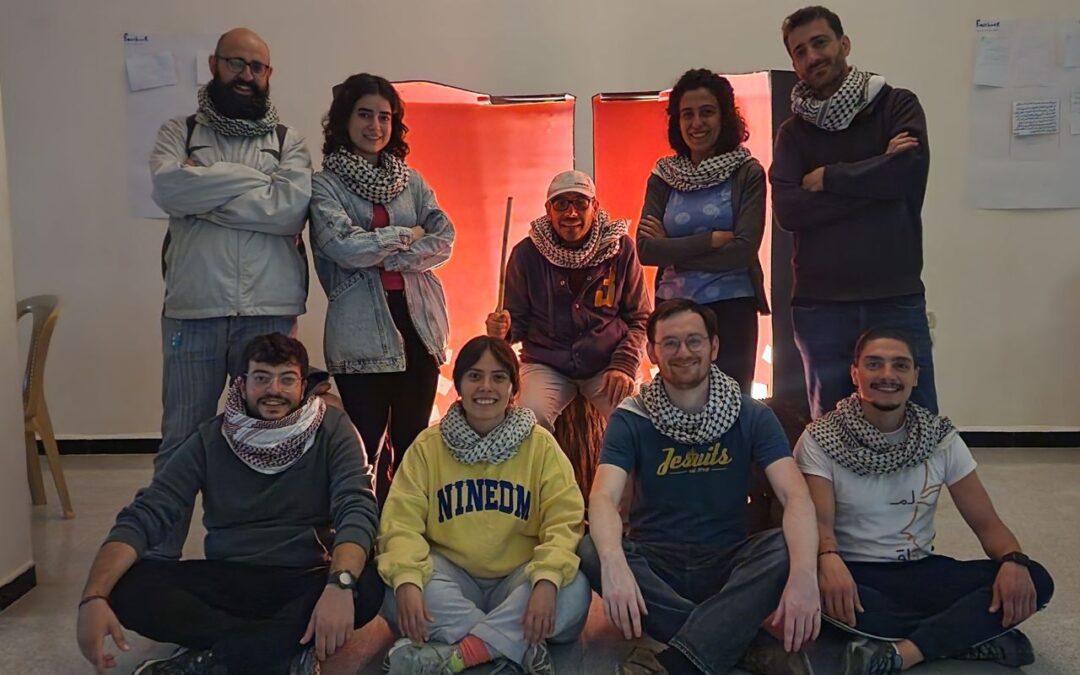
تدريبي الرسولي في بيت ألبيرتو – جرمانا – دانيال عطالله
بعض الهدايا البسيطة تتحوّل انكشافًا وتوضيحًا لمسيرة نموّنا في الحياة. هذا ما أرغب أن أشارككم إيّاه ضمن خبرة تدريبي الرسولي في بيت ألبيرتو اليسوعيّ في جرمانا، خبرةً حجزت موقعها في تاريخي.
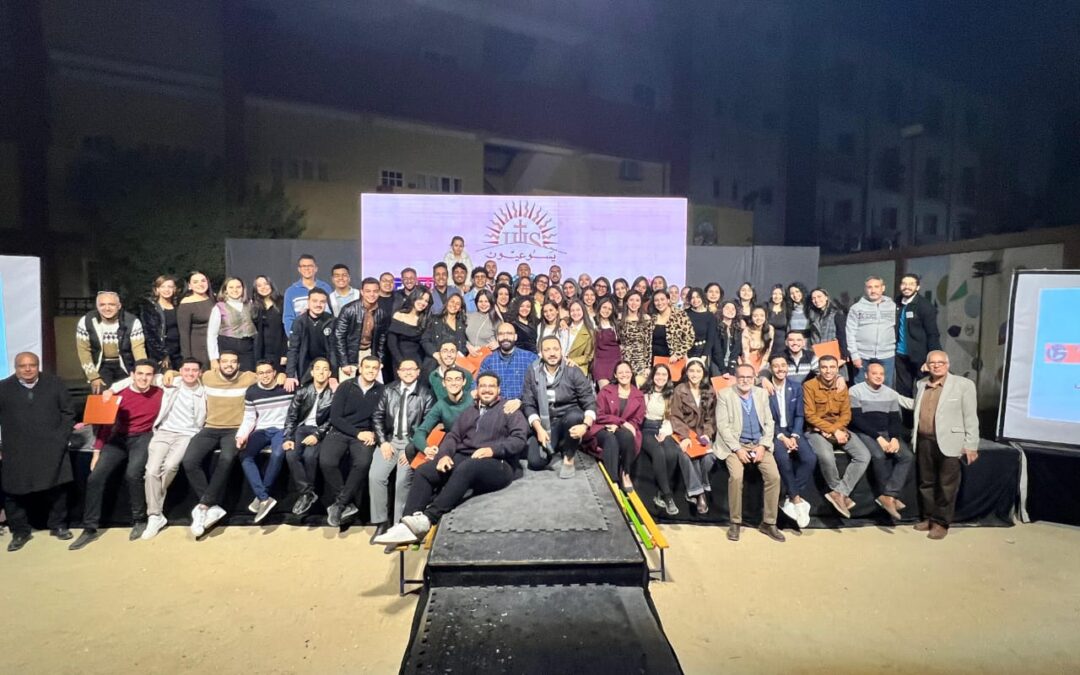
خبرتي الروحيّة في التدريس الرسوليّ في المنيا – رودي خليل
“ستعيش خبرة سنتي التدريب الرسولي في المنيا…” تفاجأتُ، قَلِقْتُ، وتوترتُ. ليس من المنيا بحد ذاتها، لكن بعد محاولة تمييزي للمدينة والناس والجماعة التي يدعوني إليها الله، لم تتطابق واختيار الرؤساء. يومان من القلق، ثم تقبّلتُ الفكرة. وضّبتُ الحقائب بأقلّ ما يمكن، ووصلتُ في أوّل العام الدراسي لسنة ٢٠٢٤-٢٠٢٥.

A few months ago, when bombs were falling on the country and on Beirut, it was uncertain whether I could be with you on this occasion. Yet, I deeply wished it would be possible. Today, I am truly delighted that the situation, which has so profoundly changed since then, allows me to be here. I am very pleased to be able to join you in celebrating the 150th anniversary of the Saint Joseph University of Beirut and, through this celebration, to express the deep attachment and esteem of the Society of Jesus.
An anniversary, especially for an institution such as this, is always an opportunity to reflect on the path traveled, to remember all that has been experienced – the joys and sorrows, failures and successes. It is a time to recall the many faces that have marked its journey and to rejoice in seeing this institution alive and standing strong, determined to continue the adventure of the University project at the service of this country. Indeed, the Saint Joseph University of Beirut is inseparably linked to the history of this nation. It has always been perceived as a steadfast institution, a reference for all, a pillar of hope, particularly in the darkest hours you’ve experienced. It is both moving and impressive to imagine the generations of students, as well as teachers and staff, who, over the past 150 years, have given life to this University.
Of course, in this history, the role of the Society of Jesus is evident – from the founding Jesuits to those who remain resolutely dedicated to this noble mission today. These Jesuits came from diverse backgrounds, passing the torch with their distinct temperaments, strengths, and limitations. They devoted themselves passionately to this mission, with some even giving their lives for it. How can we overlook names like Father Jean Ducruet, whose courageous and visionary choices fifty years ago made him one of the refounders of the modern University? But also, Louis Pouzet, Pierre Madet, Jacques Loiselet, John Donohue, and of course, Salim Abou, René Chamussy, or Peter-Hans Kolvenbach, to name just a few among those many of you have known? I know how deeply they have left their mark on the University and, at times, even on the history of this country. Still today, the Society of Jesus remains engaged in various missions at the University, with the resolute and renewed commitment of a team of Jesuits.
However, I must also acknowledge that there would be no Saint Joseph University of Beirut today without your commitment alongside the Jesuits – and theirs alongside you: teachers, staff, alumni, friends of the University, benefactors, etc. So many names could be listed, but I prefer not to single out anyone, as the list would be endless. Together, you form an academic community. Each in your role, you have believed in the University’s mission and dedicated yourselves to its continuation. I am deeply impressed by your resilience, your ability not to falter in the face of wars, destruction, and the losses that have grieved you. How many times have you had to convince yourselves not to give up but to move forward despite everything, even when all seemed lost! Indeed, you have maintained the commitment to a “broad, bold, and creative vision.” I want to express my admiration, gratitude, and appreciation for you. You are a testament to life and faith – faith in humanity, faith in the future, and faith in God.
On this occasion, I want to assure you that the Saint Joseph University of Beirut is not isolated but well-integrated into solidarity networks, notably the International Association of Jesuit Universities (IAJU), in which it actively participates. It is also part of other significant networks, such as those of engineering schools, the Kircher Network of Jesuit universities in Europe, and numerous academic connections in Europe, especially with France. Your work and experience here in Lebanon – a crossroads of many worlds – as well as your presence in Dubai and, more recently, in Abidjan, allow your mission to be framed within a broader perspective and help keep alive the necessity of open horizons. These connections are important for all universities and training centers affiliated with the Society of Jesus worldwide.
I would also like to thank you for the creation of the University’s Board of Trustees, several members of which, including its President, are with us today. This Board of Trustees, whose establishment I encouraged, is now fully operational. It is a significant and valuable asset in the governance of the University, especially in an increasingly complex era that demands diverse expertise and a broad vision.
Yes, dear friends, there is much to be grateful for over these past 150 years – the good that has been achieved and the joys that must be celebrated. This is vital because we can sometimes be tempted to focus solely on difficulties and problems, forgetting the good that has been done and the tangible fruits of your dedication.
Yet, this anniversary is not merely about looking back at the past, as impressive and courageous as it may be. It is an opportunity to draw on this history to look toward the future, discern what needs continuation, modification, adaptation, and innovation, and to embrace a time of renewal and hope in service of the mission. Why has this mission persisted for 150 years? What drives us to continually persevere and start afresh? You all know that it is a mission that transcends our individual lives. Yet, within this story, one can identify a “red thread,” a unique “melody,” that belongs to the Saint Joseph University of Beirut and to which you are rightfully attached.
Throughout these 150 years, the University has undergone significant evolution. A pivotal milestone was the vision and determination, championed by Fr. Ducruet, to establish a united and coherent academic body, embracing the diversity of disciplines and the unique histories of its faculties and institutes. This essential unity in diversity clarified the University’s mission. The University Charter, whose 50th anniversary you are celebrating this year, remains a cornerstone document that inspires your future endeavors.
Allow me to highlight some key aspects of this Charter that remain particularly relevant today. They resonate with the Society of Jesus’ four Universal Apostolic Preferences (UAPs) defined in 2019 to guide its mission for the next decade – starting with the third preference, which explicitly states our commitment to “accompany young people in the creation of a hope-filled future” (UAP #3).
The Charter emphasizes the University’s dual mission: preparing students for professional careers while also cultivating intelligence and nurturing the spirit. This dual focus is central to what makes the Saint Joseph University of Beirut unique. A strong general education and critical thinking are indispensable assets in today’s ever-changing professional world, which demands constant adaptation.
It is no surprise that your graduates are highly valued in workplaces in Lebanon and abroad. Their education aims to equip them with critical thinking skills, ethical discernment, and the ability to evaluate situations independently and collaboratively. They are trained not merely to follow prevailing trends or ready-made ideas but to think deeply and act purposefully.
I would like to highlight the social and ecological mission of the University, beginning with its efforts in sustainable development. Indeed, you are committed to “collaborate in the care of our Common Home” as recommended by the fourth Universal Apostolic Preference (UAP #4). Sustainable development is thus at the heart of the University’s priorities. In fact, the University has initiated a true ecological transition that is transforming daily campus life. Roofs, once unused, are now covered with solar panels, significantly contributing to electricity production. Sustainable development has become a central pillar of all study programs, while research centers are launching projects on renewable energies, attracting researchers together with local and international partners.
In addition, the University’s social mission is no empty word. It is rare for a university to carry this concern so strongly, but it is part of your identity. This aligns perfectly with the second Universal Apostolic Preference of the Society of Jesus, which calls us to “walk with the poor and outcasts of the world, those whose dignity has been violated, in a mission of reconciliation and justice.” (UAP #2). At every crisis your country has faced, the University, alongside Hôtel-Dieu de France, has responded concretely on the ground to provide assistance.
I want to express my profound gratitude to Hôtel-Dieu de France, the University Medical Center, which has played a crucial role in supporting the Lebanese people during the long periods of war and crisis. The unwavering commitment of its medical staff and their tireless dedication represent a beacon of hope for the country. Its medical services and humanitarian efforts continue to inspire society, highlighting values of compassion and solidarity.
I also think of all those actively involved in Opération 7e jour, established to respond to the 2006 war and still continuing its work today, or the mobilization efforts following the Beirut port blast, and more recently, the work of the NGO Al Mazeed in collaboration with the University Campus Ministry and other NGOs and associations, to address the many dramatic situations caused by war. You actively encourage your students to engage and view their university education as a service to the common good.
Of course, the work of the University’s Financial Aid Office, which provides various forms of assistance – financial, psychological, medical, and legal – to the students.
I would also like to take this opportunity to thank all the benefactors, those who, sometimes silently, so generously support the mission of the Saint Joseph University of Beirut. Most of the University’s major recent achievements have only been made possible thanks to the generosity and trust of donors and friends of the University. Thank you deeply. You are an integral part of the University’s mission, the mission of the Society of Jesus. Without you, the University cannot continue. Our gratitude is immense.
Everything I have just mentioned reflects, as Article 4 of the University Charter reminds us, the tradition of Christian humanism, which places the flourishing of the human person at the center of its educational vision. To this end, the education provided seeks to integrate the spiritual dimension and existential questions as an integral part of human development. More than ever, we see how many of our contemporaries grapple with questions of meaning. The University exists to help everyone, respecting their journeys and convictions, to build a coherent life. This is your mission. On this point, do not hesitate to draw upon the resources of the Ignatian tradition that “invites to show the way to God”, as highlighted by the first Universal Apostolic Preference (UAP #1).
Finally, the Charter reminds us that the University seeks to reflect the fundamental principles of human rights upheld by the social doctrine of the Catholic Church, such as the dignity of the human person, religious freedom, and dialogue with modern culture. Freedom is positively linked to the communal dimension, valuing religious diversity as a richness and promoting dialogue, mutual understanding, and collaboration. In this regard, the University’s establishment in various regions of the country, with its three campuses in Tripoli, Sidon, and Zahle, demonstrates its commitment to being closely aligned with the realities and expectations of all Lebanese people.
In line with this vision, you have always ensured that higher education is not reserved for a particular social class or ethnic or religious community. At certain times – as you know better than I do – this was neither obvious nor always well understood. Yet, this commitment is essential: education and knowledge must be accessible to all, insofar as possible. I am impressed by the consistent efforts to develop scholarship programs and enable the greatest number of students to access or continue their studies at the Saint Joseph University of Beirut.
Thus, in continuity with the spirit of the University Charter, the reformulated vision and mission of the Saint Joseph University of Beirut in 2022 reaffirmed its national mission to work for the values of coexistence, democracy, and national reconciliation.
The Professional Mediation Center has already trained thousands of people, equipping them with strong skills in this field. Various academic institutions, such as the Faculty of Law, the Institute of Political Science, the Institute of Muslim-Christian Studies, the Training Academy for Citizenship, the Observatory on Public Service and Good Governance, and others, serve as hubs for teaching, scientific research, and service to the national community. They address critical issues such as conflict management, pluralistic societies, political and administrative reforms, and the training of agents for peace, justice, and citizenship. It is encouraging and uplifting to see many alumni engaged in professional, associative, and political life, nourished by these ideals.
All these initiatives contribute to a fundamental issue for societal life, especially in this region, so deeply marked by violence and various conflicts: the issue of reconciliation. This is a mission to which the Society of Jesus is particularly committed. It is a mission that requires courage and tenacity, without naivety. It makes it possible to reopen the future. Thank you for being, as a University, at the service of this mission of reconciliation.
Dear friends, it is time for me to conclude. As we have already said, the Saint Joseph University of Beirut is inseparably linked to the history of Lebanon. In the spirit of Pope John Paul II, who affirmed that Lebanon is a message, we too dare to say, with some audacity, that Saint Joseph University is more than just a Lebanese higher education institution; it is a model for this country.
With my gratitude to all of you, starting with you, dear Father Rector Salim Daccache, who leads this beautiful institution through often challenging times, I strongly encourage you to continue the mission of service of the Saint Joseph University of Beirut and wish you, wholeheartedly, a very happy anniversary!
Fr. Arturo Sosa, S.J.
أخبار ذات صلة
الخبرة الرسوليّة للدارس رامي منير
القلمُ الذي بدأ يكتب شعر أنّه يقترب من غايته، لكنّه مع الوقت احتاج أن يُبرى؛ لأنّ البراية، رغم ألمها، هي التي تعيد إلى القلم قوامه وحدّته، فيعود قادرًا أن يخطّ كلماتٍ جديدة بحياةٍ جديدة.
هكذا أصف هذه السنة.
تدريبي الرسولي في بيت ألبيرتو – جرمانا – دانيال عطالله
بعض الهدايا البسيطة تتحوّل انكشافًا وتوضيحًا لمسيرة نموّنا في الحياة. هذا ما أرغب أن أشارككم إيّاه ضمن خبرة تدريبي الرسولي في بيت ألبيرتو اليسوعيّ في جرمانا، خبرةً حجزت موقعها في تاريخي.
خبرتي الروحيّة في التدريس الرسوليّ في المنيا – رودي خليل
“ستعيش خبرة سنتي التدريب الرسولي في المنيا…” تفاجأتُ، قَلِقْتُ، وتوترتُ. ليس من المنيا بحد ذاتها، لكن بعد محاولة تمييزي للمدينة والناس والجماعة التي يدعوني إليها الله، لم تتطابق واختيار الرؤساء. يومان من القلق، ثم تقبّلتُ الفكرة. وضّبتُ الحقائب بأقلّ ما يمكن، ووصلتُ في أوّل العام الدراسي لسنة ٢٠٢٤-٢٠٢٥.
Mot du Père Provincial : Entre Souffrance et Espérance
Nous entrons aujourd’hui dans la Semaine Sainte. Ayant célébré l’entrée triomphale de Jésus à Jérusalem, nous avons lu sa Passion selon Saint Matthieu. La joie et la fête sont derrière nous et nous entrons dans le mystère de Jésus qui se donne entièrement pour nous sauver. En attendant la Résurrection, c’est ce don de soi total — et la souffrance qui en découle — qui retient toute notre attention.
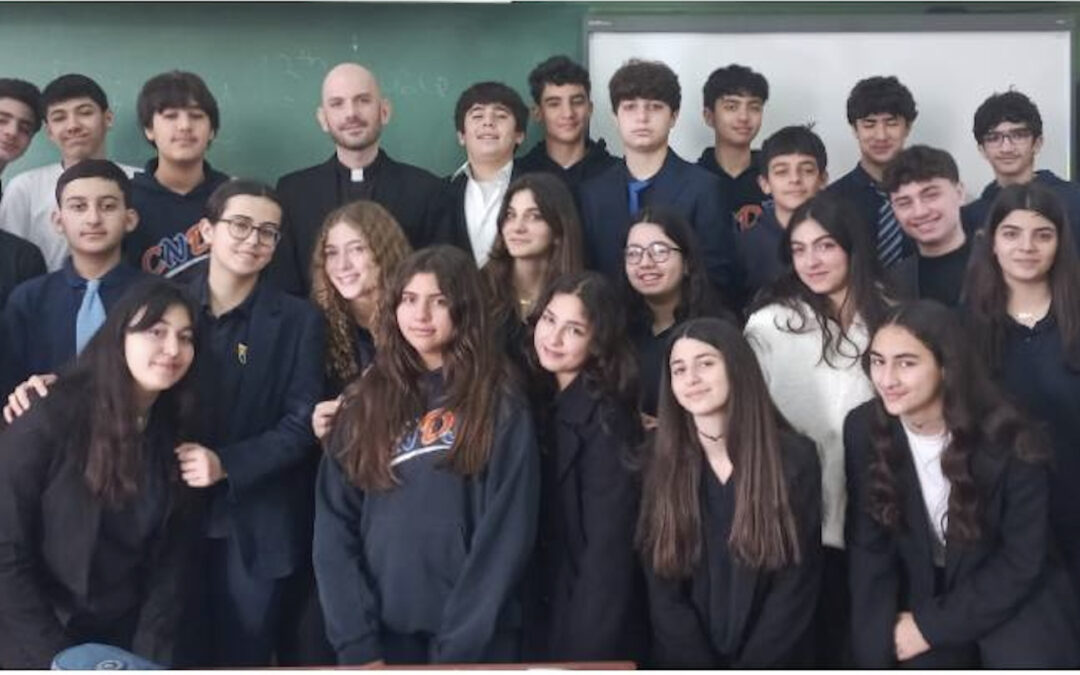
A Conversation with Br. Andrew Milewski SJ
This year at Collège Notre-Dame de Jamhour, Brother Andrew Milewski, SJ is serving on a one-year mission with the Jesuits in Lebanon and the Near East Province. He is a Jesuit in formation and is preparing for ordination in the Melkite Greek Catholic Church.
الخبرة الكبيرة – المبتدئ روجيه مجدي
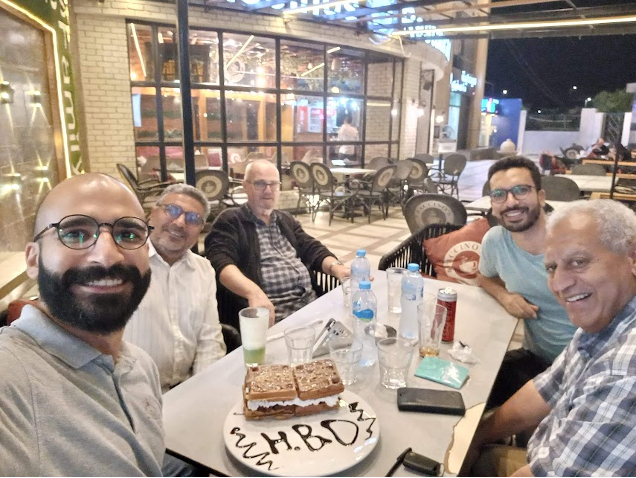
كل راهب يسوعي فور انضمامه للرهبنة يكون في مرحلة الابتداء. ومن مراحل التكوين أن في عامه الثاني للابتداء يذهب في خبرة طويلة. وعليه فقد كان محدد لي أن أرسل إلى مدينة المنيا لقضاء وقت خبرتي هناك حيث يوجد مُجمع به دير اليسوعيين، ملحق بمدرسة الآباء اليسوعيين، وجمعية “الجزويت والفرير” التنموية، ومبنى لتكوين الشباب. وعلى مسافة 20 دقيقة سيرًا على الأقدام، جنوبًا من/قبلي المدرسة يوجد مبنى الفرير بمنطقة جاد السيد الذي فيه تتم أنشطة تعليمية وتربوية لأهل المنطقة. ويُدعى الفرير نسبة لأول من أسسه الفرير شمعون اليسوعي لبناني الأصل.